
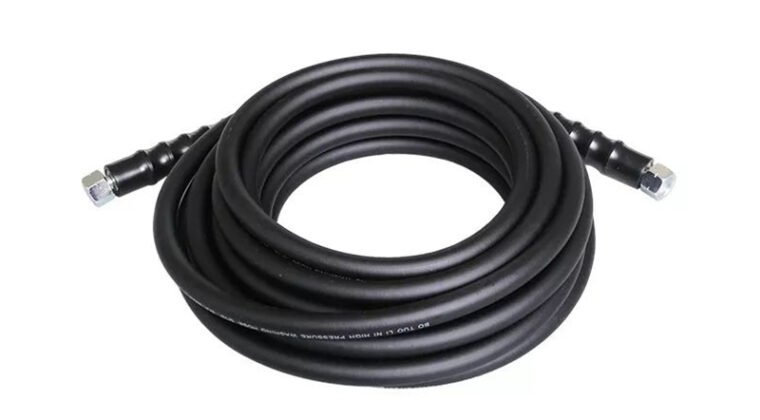
Introduction: Key Factors for Selecting a Reliable Pressure Washer Hose
Selecting a reliable pressure washer hose requires careful consideration of several key factors, including material, rated pressure, inner diameter, length, and inner surface smoothness. Different hose materials serve distinct purposes: PVC hoses are widely used for residential scenarios due to their affordability and light weight, while steel-braided hoses are more suitable for commercial and heavy-duty applications, thanks to their excellent durability and pressure resistance. It is crucial that the hose’s rated pressure meets or exceeds the maximum pressure of the washer to avoid premature wear and potential safety hazards. Additionally, the inner diameter must match the machine’s flow rate to ensure optimal cleaning performance, and shorter hose lengths are preferred to minimize pressure loss. A smooth inner bore can effectively reduce friction, enhance water flow efficiency, and maximize the cleaning power of the pressure washer. By comprehensively evaluating these factors, you can select a durable and efficient pressure washer hose that meets your specific usage needs.
1. Hose Material: Choose Based on Usage Scenario
The material of a pressure washer hose is a core factor determining its service life, weight, and applicability, directly affecting the overall cleaning efficiency and operational cost. Selecting the appropriate material based on your specific usage scenario—whether residential or commercial—is the first step to ensuring long-term, stable use. For example, residential users may prioritize portability and cost-effectiveness, while commercial users focus more on durability and pressure resistance. Choosing the wrong material can lead to frequent hose replacements, increasing maintenance costs and affecting work progress.
1.1 PVC Hoses: Ideal for Residential Use
PVC pressure washer hoses are affordable and lightweight, making them perfect for home pressure washers. With proper use, they can last over 10 years, offering good resistance to corrosion and abrasion. They are easy to store and carry, suitable for daily household cleaning tasks such as car washing and patio cleaning.
1.2 Steel-Braided Hoses: Suitable for Commercial & Heavy-Duty Use
For commercial or heavy-duty use, steel-braided hoses are superior. They provide exceptional durability and pressure resistance, able to withstand high-intensity work environments. However, they tend to be heavier and require more maintenance for fittings, which is a trade-off for their robustness.
2. Rated Pressure: The Most Critical Factor for Safety & Longevity
Rated pressure is the maximum pressure a hose can withstand during long-term use, and it is the most important factor to avoid hose damage and ensure operational safety.
2.1 Key Requirement: Match or Exceed Washer’s Rated Pressure
Rated pressure refers to the maximum pressure a hose can withstand during long-term continuous operation, which is the most critical factor for ensuring operational safety and extending the hose’s service life. The hose’s working pressure rating must be equal to or higher than the pump’s rated pressure; any deviation from this requirement will have serious consequences. If the washer’s operating pressure exceeds the hose’s rated limit, the hose will suffer accelerated wear, with its service life shortened by half or more. Worse, it may cause the hose to burst suddenly during use, posing safety risks to operators and damaging surrounding equipment. Therefore, strictly matching the hose’s rated pressure with the washer’s pump pressure is non-negotiable for safe and efficient operation.
3. Inner Diameter: Balance Pressure Loss & Cleaning Power
The inner diameter of the pressure washer hose affects both pressure loss and cleaning efficiency. Choosing the right inner diameter based on the machine’s flow rate ensures optimal performance.
3.1 Selection Guide Based on Flow Rate
Inner diameter balances pressure loss inside the hose and external friction with surfaces. Larger diameters reduce pressure loss and boost jet impact force but increase drag, limiting the nozzle’s reach. As a general rule:
- For flow rates below 50 L/min, choose a 6mm inner diameter hose.
- For 60–90 L/min, opt for 10mm.
- For 100 L/min or higher, select 13mm or larger.
4. Hose Length: Minimize Pressure Loss for Better Performance
Hose length directly impacts pressure loss and cleaning power. The longer the hose, the greater the pressure loss, which reduces the impact force at the nozzle.
4.1 Practical Selection Principle
Shorter hoses minimize pressure drop, delivering stronger force at the nozzle. Therefore, use the shortest practical length for most tasks, reserving longer hoses only for extended-reach applications (such as high-rise building cleaning or large-area outdoor cleaning).
5. Inner Surface Smoothness: Reduce Friction & Maximize Efficiency
The smoothness of the hose’s inner surface affects friction resistance and pressure loss. A smoother inner bore can effectively reduce energy loss and improve cleaning efficiency.
5.1 How to Choose a Smooth Inner Surface
Materials like rubber, nylon, or polyamide vary in roughness, and higher friction coefficients increase pressure loss. To maximize nozzle output, look for a pressure power washer hose with a polished inner bore, which ensures smooth water flow and minimizes pressure loss.
Conclusion: Comprehensive Selection for Optimal Performance
In summary, choosing the right pressure washer hose requires a comprehensive balance of multiple factors: material selection should align with your usage scenario (residential or commercial), rated pressure must match the washer’s pump pressure to ensure safety and durability, inner diameter should be selected based on the machine’s flow rate to avoid pressure loss, length should be kept as short as possible while meeting work needs, and a smooth inner surface is essential to reduce friction and improve efficiency. By carefully evaluating each of these factors, you can select a high-quality pressure washer hose that not only enhances the washer’s performance but also reduces maintenance costs and extends service life, making every cleaning task more efficient and hassle-free, whether for daily household use or large-scale commercial operations.

1y0015