
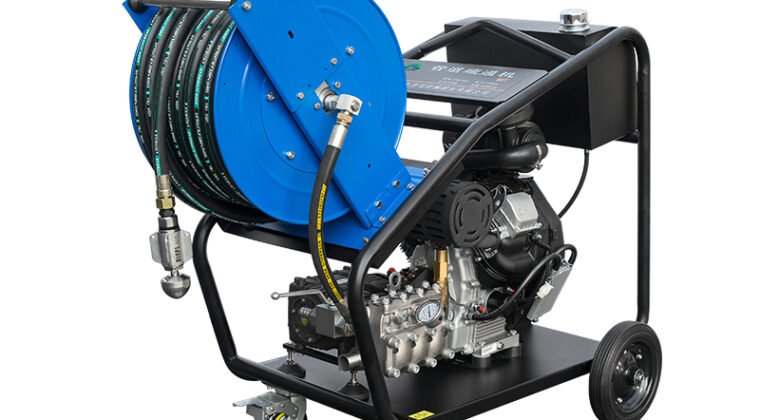
A pressure washer can strongly strip and wash away all kinds of stubborn dirt to clean the surface efficiently. With high-pressure water jets as the cleaning medium, high-pressure water cleaning has become a globally recognized mainstream cleaning method for its high efficiency, environmental friendliness and cost-effectiveness. Combined with practical pressure washer tips, this article takes the FlowPX brand as an example to fully explain the correct usage, daily maintenance rules and industry-specific pressure parameters of high-pressure cleaning machines, helping users operate standardly and extend equipment service life.
I. Practical Pressure Washer Tips: Operation & Usage Instructions
1. Pre-start Preparation
Before operation, check the installation of the water pipe filter, and keep the oil level at half of the oil window. Install rubber gaskets on the inlet hose joint to prevent water leakage.
2. Hose Connection
Connect one end of the high-pressure hose to the booster pump outlet and the other end to the spray gun joint to ensure tight connection.
3. Nozzle Selection
- Fan nozzle: Wide coverage with stable impact force, suitable for large-area cleaning such as vehicles, building exteriors and kitchen facilities.
- Round hole nozzle: Concentrated high-power water flow, designed for heavy dirt on construction and agricultural machinery.
4. Cleaning Distance & Pressure Adjustment
Keep the nozzle within 10 cm from the cleaning surface to maintain optimal washing power. Stick to rated working pressure in daily use; short-term pressure increase is allowed for special tasks, but long-term overpressure operation is prohibited.
5. Shutdown Steps
Releases the gun trigger for automatic shutdown. Cut off the power for long-term storage and completely release residual water pressure before storage.
II. Essential Pressure Washer Maintenance Tips
1:Proper maintenance is the core of stable operation and can greatly reduce equipment failure.
2:Regular oil replacement: Replace CD15W-40 engine oil every 100 working hours to ensure stable engine performance.
3:Antifreeze drainage: In cold weather or long-term storage, disconnect the water inlet and run the machine idly for 1 minute to drain residual water and avoid frost damage.
4:Impurity cleaning: Clean sediment in the oil tank regularly and replenish lubricant to reduce component wear.
5:Storage protection: Cover the equipment with a dust-proof cover after use. Lubricate valves and seals regularly to prevent sticking and aging.
III. Industry Pressure Range for High-Pressure Cleaning Machines
| Industry | Code | Applications | Recommended Pressure (Bar) |
|---|---|---|---|
| Marine & Shipping | MAR | Remove marine organisms, loose paint, rust on hulls, docks, tanks, boilers; clean underwater pipelines and drilling platforms | 500~900 |
| Seafood & Meat Processing | FOO | Clean grease, blood, carbon deposits and dirt in slaughterhouses, packaging equipment, containers, ovens and tanks | 250~350 |
| Metal Fabrication | MET | Remove oxides, rust and welding slag from new tanks, containers and pipelines | 700~1400 |
| Mining | MIN | Clean dump trucks, equipment and underground lines before maintenance | 250~350 / 500~700 |
| Municipal Construction | MUN | Clean reservoirs, sewers, drainage systems, waste trucks and facilities | 250~350 |
| Oil Industry | OIL | Eliminate crude oil wax, sludge and scale on platforms, tanks, pipes and oilfield equipment | 700~1400 |
| Petrochemical | PET | Clean algae, scale, carbon deposits and residues on heat exchangers, reactors, cooling towers Daily: 350~500 | Annual: 700~1400 | 350~1400 |
| Pharmaceutical | PHAR | Remove chemical residues from pipelines, furnaces, heat exchangers, reactors and filters | 500~700 |
| Pipeline Industry | PIP | Paint stripping, rust removal, glue/sludge cleaning for recoating and renovation | 700~1400 |
| Power Generation | ELE | Clean fuel tanks, heat exchangers, pipelines and power equipment Daily: 400~500 | Annual: 700~1400 | 400~1400 |
| Public Facilities | PUB | Maintain reactors, boiler pipelines, public vehicles and utility equipment | 250~700 |
| Aluminum Manufacturing | ALU | Clean dust, sediment and heat exchange pipelines Daily: 350~400 | Seasonal: 500~700 | Overhaul: 700~1400 | 350~1400 |
| Automotive | AUT | Remove paint residue and dirt in spray booths, conveyor belts and auto parts for repair/maintenance | 700~1400 |
| Aerospace | AER | Clean runways, fuselage, engines and grease for civil/military aircraft | 700~1400 |
| Brewing | BRE | Clean fermentation tanks, pipelines, storage barrels and production lines | 250~350 |
| Cement & Concrete | CEM | Remove dirt and hardened concrete from mixers and construction vehicles Daily: 300~350 | Seasonal: 400~500 | Annual: 700~1200 | 300~1200 |
| Chemical Industry | CHE | Clean contaminants on boilers, valves, evaporators and reactors Daily: 300~350 | Seasonal: 500~700 | Annual: 1200~1400 | 300~1400 |
| Food Processing | FPR | Remove fat, oil, sludge and deposits on food processing machines and conveyors | 250~400 |
| Casting & Foundry | CAS | Hydraulic sand cleaning for castings Primary: 300~350 | Fine: 400~700 | 300~700 |
| Road Maintenance | ROA | Clean road machinery, paint, tar, cement stains and heavy oil on bridges and pavements | 350~1400 |
Different industries have distinct dirt conditions. Matching proper pressure improves cleaning efficiency and protects materials and equipment.
As a professional cleaning equipment brand, FlowPX focuses on the R&D and production of pressure washers. Our full-series high-pressure cleaning equipment covers all pressure specifications to meet customized cleaning demands from various industries. With mature technology and strict quality control, we provide durable and high-efficiency pressure washing solutions for global clients.