
Introduction: The Importance of Paint Removal in Industrial Fields
In the industrial sector, rust and old paint removal is an essential task that directly affects the service life of machinery and equipment, as well as the safety and efficiency of production operations. Failure to timely treat rust and aged paint on equipment surfaces will not only hinder normal workflow but also lead to irreversible damage to machinery and facilities.
To meet this industrial demand, high-pressure water cleaners have become the mainstream solution. They rely on physical water pressure to deliver efficient, eco-friendly paint stripping and rust elimination. This article focuses on how to remove paint with pressure washer, and systematically elaborates on its working principle, practical application scenarios, core advantages, and critical operational precautions.
Working Principle of Removing Paint with Pressure Washer
The principle of paint and rust removal by high-pressure water cleaner is based on the strong impact force of high-pressure water flow, which achieves physical stripping of paint and rust without damaging the base material. The specific process is as follows:
Core Working Process
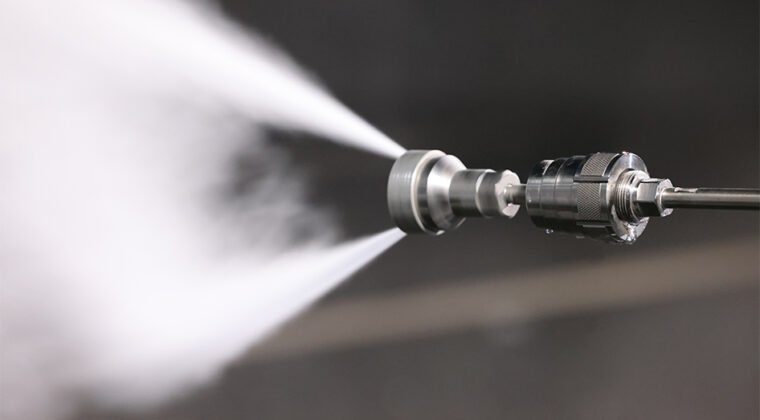
In the paint removal system, the high-pressure water pump of the high-pressure water cleaner generates high-pressure water, which is transmitted to the nozzle through a high-pressure pipeline. Under the constraint and guidance of the nozzle, the high-pressure water forms a high-speed, high-impact fan-shaped or linear water jet, which is precisely sprayed onto the surface of the object (such as steel billets, ship decks, or containers) that needs paint removal.
Paint Stripping Mechanism
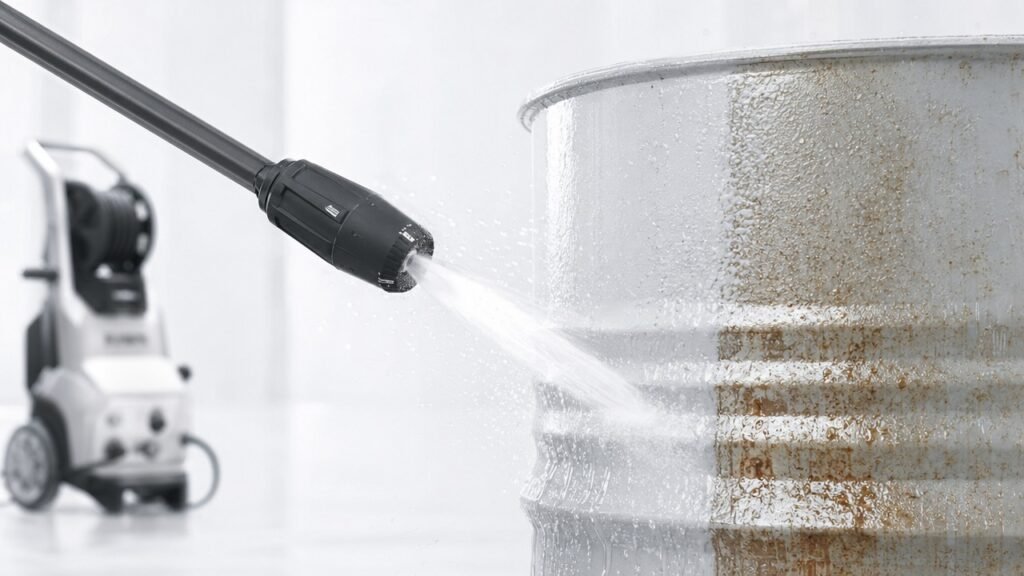
When the high-pressure water jet acts on the old paint layer and rust, it goes through three key stages: first, the water jet cuts the paint layer and rust, breaking their structure; second, the rapid impact of the water flow causes the paint layer to undergo rapid cooling and contraction, forming gaps between the paint layer and the base material; finally, the continuous impact of the water flow peels off the paint layer and rust from the base material and washes them away, thus achieving thorough paint and rust removal. This physical cleaning method is the core advantage of using a pressure washer to remove paint, as it avoids the pollution and damage caused by chemical cleaning or manual grinding.
Practical Applications of Pressure Washer for Paint Removal
High-pressure washers for paint removal are widely used in various industrial fields due to their efficiency, environmental protection, and strong adaptability. The following are the key application scenarios, with a focus on ship-related paint removal operations.
Ship-Related Paint Removal Applications
Ships are long-term in harsh marine environments, and the paint layer on the hull and deck is prone to peeling, rusting, and contamination, so regular paint removal and maintenance are essential. Using a pressure washer to remove paint has become the preferred method for ship maintenance.
Ship Hull Surface Paint and Rust Removal
During ship construction, it is necessary to remove the original oxide skin, rust, and oil stains on the hull steel plates to ensure the adhesion and anti-corrosion performance of the new paint. The high-pressure washer for paint and rust removal can efficiently remove these impurities, providing a clean and smooth base for subsequent painting. During ship maintenance, it can also quickly remove old paint layers and rust on the outer hull, helping to repair damaged parts and extend the service life of the ship.
Ship Deck Paint Removal: How to Remove Deck Paint with Pressure Washer
The ship deck is exposed to wind, sun, and sea water for a long time, and the paint layer is easily worn and rusted, which affects the safety of the deck. Many workers and maintenance personnel are concerned about how to remove deck paint with pressure washer. The correct operation steps are as follows:
Step 1: Equipment Selection
Choose a portable high-pressure washer with adjustable pressure, which is easy to move on the deck and can adapt to the narrow space of the ship. It is recommended to select a model with a pressure range of 150-300 bar, which can meet the paint removal needs of different thicknesses.
Step 2: Nozzle and Parameter Adjustment
Use a 15° fan nozzle, which can achieve uniform paint removal without damaging the deck structure. For thin old paint layers, set the pressure to 180-220 bar; for thick paint layers, adjust the pressure to 250-300 bar. Keep the nozzle perpendicular to the deck surface, and control the distance at 15-20 cm to ensure the impact force and avoid damage to the deck.
Step 3: Operation Method
Clean in a uniform horizontal direction, move the nozzle at a constant speed, and avoid staying in the same position for a long time to prevent local damage to the deck. After removing the old paint, use low-pressure water flow to rinse the deck to remove residual paint chips and impurities.
Cabin Interior Paint and Rust Removal
The bulkheads, decks, and other parts inside the ship’s cabin are prone to rust and oil stains due to poor ventilation and long-term use. Using a portable pressure washer to remove paint and rust can thoroughly clean these parts, maintain the cleanliness and hygiene of the cabin, and prevent rust from further corroding the hull structure. When cleaning, pay attention to controlling the water flow to avoid water accumulation in the cabin.
Container Interior Paint Removal
Containers often transport chemicals, food, and other goods, which have extremely high requirements for internal cleanliness. Traditional manual grinding is prone to leaving paint residues, and chemical cleaning may pollute the goods. Using a pressure washer to remove paint through a purely physical method can effectively avoid secondary pollution.